


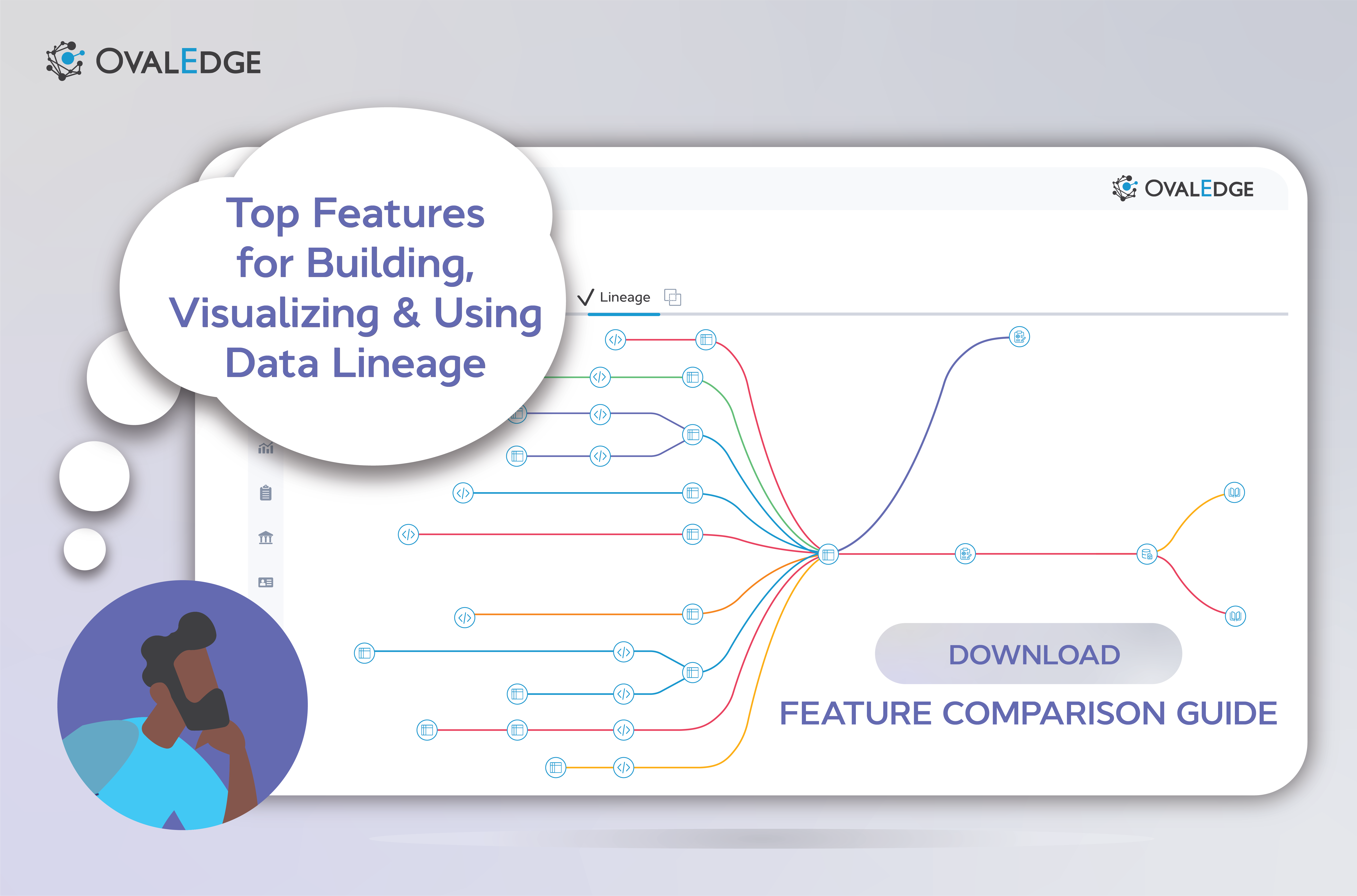
A data lineage tool tracks how data moves through your organization — from its source, through every transformation, to where it's consumed in reports and analytics. When something breaks, lineage tells you why. When regulations ask for proof, lineage gives you the audit trail. But not all lineage tools are built the same. This guide covers the features that separate a capable data lineage tool from one that falls short in real enterprise environments.
Features in Building Data Lineage
Building data lineage involves identifying and mapping the entire journey of data, including its origins, intermediate processing steps, and endpoints. The purpose is to create a clear and comprehensive understanding of how data is acquired, manipulated, and utilized throughout its lifecycle.
Related Post: 5 Core Benefits of Data Lineage
1. Lineage Across Diverse Data Systems
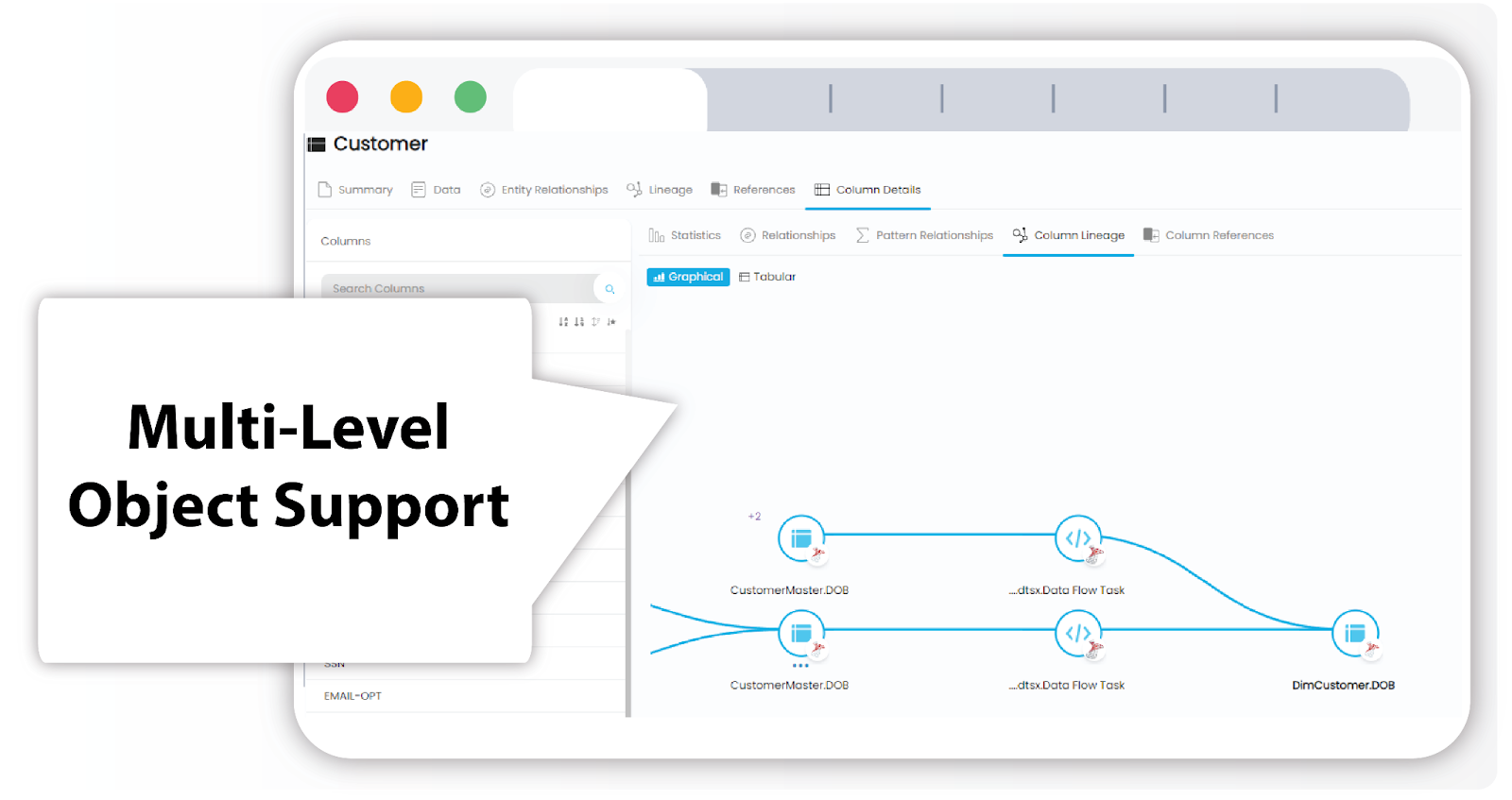
A robust data lineage tool should transcend boundaries, supporting multiple levels of objects. The tool should provide a seamless view across diverse data entities, whether it is - files, tables, reports, APIs, applications, or streaming systems like Kafka. The ability to trace lineage at the column level adds granularity, offering a nuanced understanding of data relationships.
2. Algorithmic Automation
Building data lineage manually can be a daunting task. An advanced tool automates this process through algorithms. AI-based, code parsing and query log parsing are three pivotal approaches. While query log parsing is specific to data warehouses, code parsing is versatile, working across different platforms. The tool should intelligently detect and support multi-object lineage, traversing from files to tables to reports.
3. User-Friendly Interface
The ease of building the interface is crucial for user adoption. A graphical user interface (GUI) that requires minimal clicks enhances the user experience. This feature accelerates the learning curve for users, making the tool accessible to technical and non-technical stakeholders.
4. API Support
Integration with other products is facilitated through robust Application Programming Interfaces (APIs). For programmers and developers, the availability of APIs is paramount. It enables the construction of custom lineage solutions and enhances interoperability with other tools in the data ecosystem.
Features in Visualizing Data Lineage
It is the process of representing and presenting the flow and relationships of data within a system or organization in a visual format. Visualizing data lineage involves creating graphical representations, such as diagrams or charts, that illustrate the journey of data from its source to its destination, including all the intermediate steps and transformations it undergoes.
1. Object-to-Object Level Visualization
The ability to visualize data lineage from one object to another provides a clear understanding of data movement. This feature is essential for identifying dependencies and impact analysis.
2. Column-Level Visualization
Granular insights into data lineage at the column level are crucial for understanding the transformation and movement of specific data attributes.
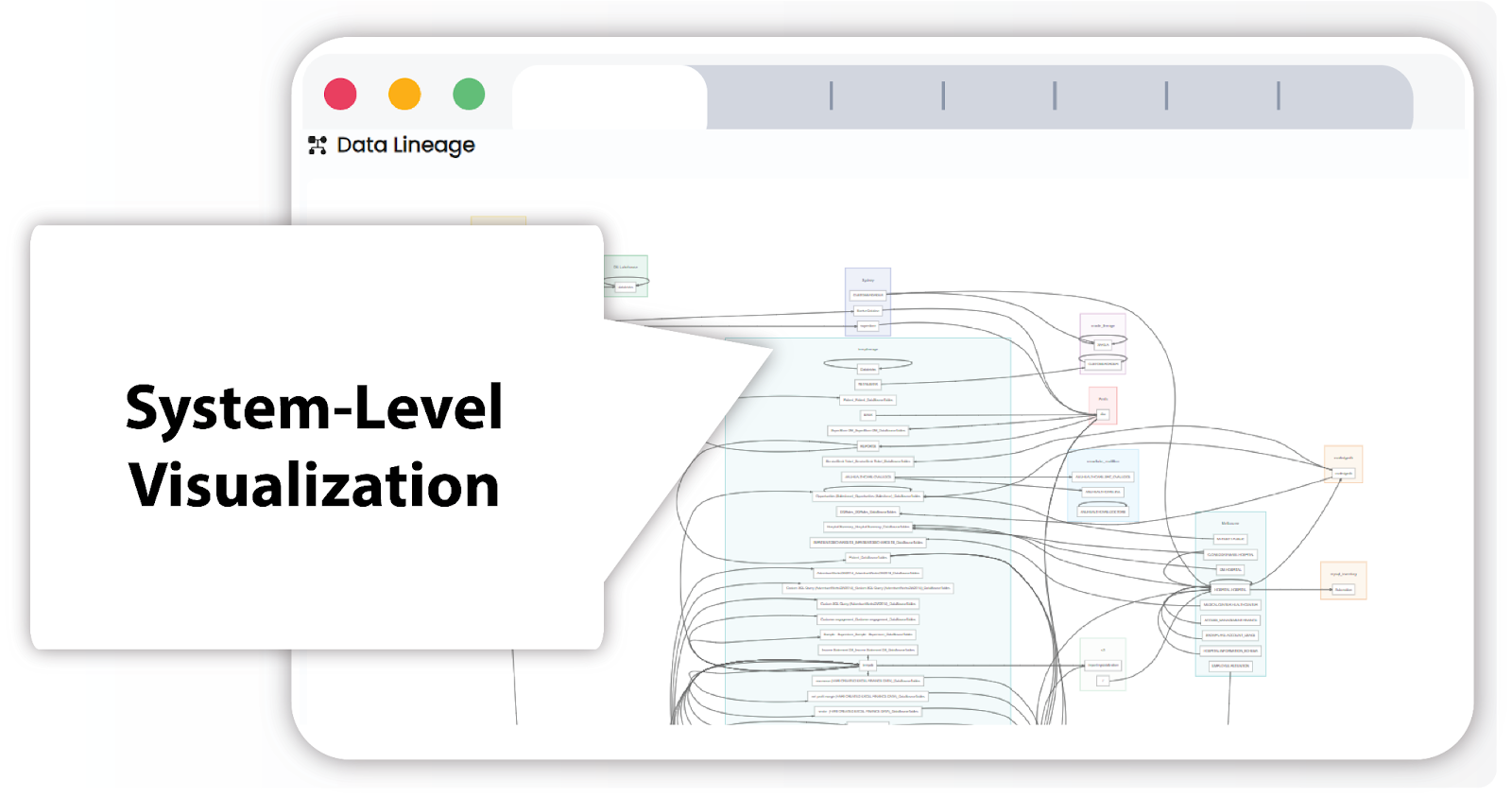
3. System-Level Visualization
A comprehensive tool should focus on individual objects and provide a holistic view at the system level. This ensures that data engineers and analysts can understand how data flows through the entire ecosystem.
4. Tracing Capability
The tool should offer tracing capabilities, allowing users to trace data lineage backward and forward. This functionality aids in identifying the origin and destination of data, facilitating effective troubleshooting and analysis.
5. Expand and Collapse Functionality
Complex data lineages can be simplified with expand and collapse features. Users should be able to expand detailed views and collapse them for a high-level overview, enhancing usability.
Features in Using Data Lineage
Using data lineage refers to applying and utilizing data lineage information within an organization's data management and analytics processes.
1. Downstream and Upstream Object Discovery
The tool should empower users to effortlessly identify all downstream and upstream objects related to a particular data entity. This feature is invaluable for impact analysis and understanding the consequences of data changes.2. API Utilization
Leveraging APIs for communication is a game-changer. In scenarios where a source file is broken, the tool should enable automated communication with relevant stakeholders, including business owners, stewards, and custodians. This ensures efficient collaboration and timely issue resolution.
3. Analysis Execution via API
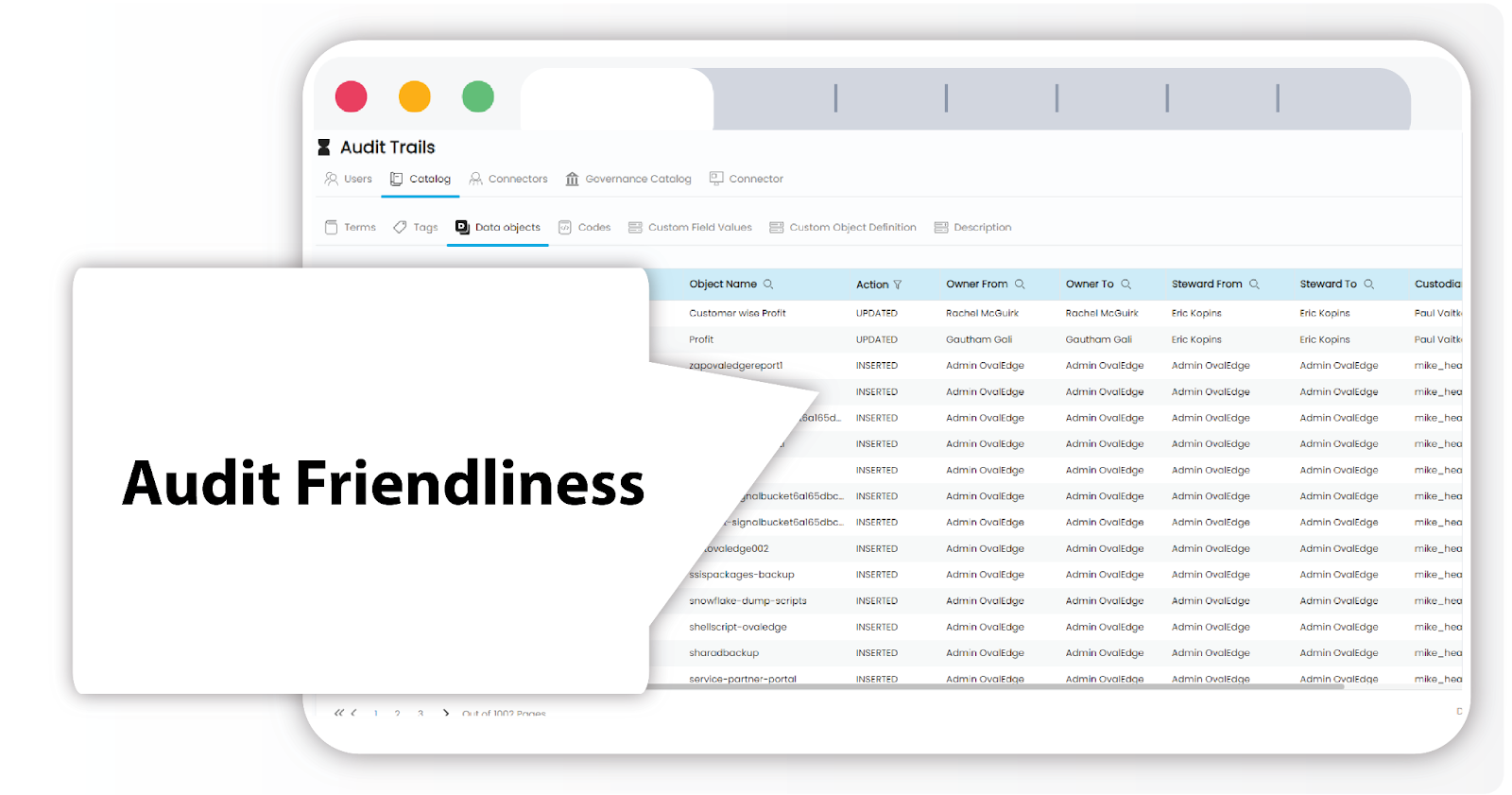
Beyond visualization, the tool should allow users to run analyses on the data lineage. This could involve data quality assessments, performance analyses, or any custom analysis defined by the organization.4. Audit-Friendliness
Robust audit trails are essential for compliance and governance. The tool should maintain detailed logs of changes, user interactions, and lineage modifications, ensuring transparency and accountability.
Related Post: Data Governance & Metadata Management: Better Together
5. Versatility Across Use Cases
A top-tier data lineage tool should be versatile, catering to a spectrum of use cases. The tool should be adaptable across diverse scenarios, from aiding data beginners in impact analysis to facilitating in-depth root cause analysis for data quality issues.
6. Workflow Integration
Integration with workflows enhances the tool's utility. For example, assigning a workflow to the report owner with data quality issues streamlines the root cause analysis process. Workflow integration ensures a seamless connection between data lineage insights and actionable steps for improvement.
Impact Analysis: Know What Will Break Before You Change Anything
One of the most practical reasons teams invest in a data lineage tool is impact analysis. When a source table changes — a column gets renamed, a field gets deprecated, a schema shifts — impact analysis shows you exactly which downstream reports, dashboards, and pipelines are affected before the change is made.
Without this, data teams are flying blind during migrations, system updates, and data quality remediation. With it, you can notify the right stakeholders proactively, prioritize fixes by business impact, and avoid silent failures in production analytics.
When evaluating tools, look for both upstream (root cause) and downstream (impact) tracing at the column level, not just the table level. Column-level impact analysis is significantly more precise and far more useful for real-world troubleshooting.
Compliance and Audit Readiness
Regulators don't accept "we think the data is accurate" as an answer. Frameworks like GDPR, CCPA, SOX, BCBS 239, and HIPAA require organizations to demonstrate exactly where data came from, how it was transformed, and who accessed it.
A good data lineage tool maintains tamper-evident audit logs that capture every change to the data flow — who made it, when, and what the downstream effect was. This documentation becomes your evidence trail during audits, reducing the time and cost of compliance reviews significantly.
Look for tools that can generate audit-ready reports, support role-based access controls tied to lineage metadata, and flag sensitive data movement in real time.
Jumpstart your evaluation of data lineage tools with our Data Lineage Feature Comparison Guide. Compare features to find the perfect fit for your data management needs. Download now.
Conclusion
Investing in a data lineage tool is an investment in understanding and optimizing your data ecosystem. The features outlined here provide a comprehensive guide for organizations seeking a tool that goes beyond visualization, offering a powerful and adaptable solution for various data management challenges. As organizations navigate the ever-evolving landscape of data, a robust data lineage tool becomes an indispensable asset, unlocking the true potential of their data assets.
FAQs
Q1. How do automated data lineage tools benefit insurance companies?
They increase compliance efficiency, reduce manual errors, and provide comprehensive data traceability across multiple systems.
Q2. What features should a data lineage tool have for insurance compliance reporting?
Granular audit trails, real-time data flow visualization, integration with regulatory frameworks, and automated risk detection are essential.
Q3. How can data lineage improve insurance claims processing?
By tracking every stage of a claim, lineage tools identify bottlenecks, verify data integrity, and help reduce fraud.
Q4. What challenges do modern data lineage tools solve compared to legacy systems?
They provide better integration, automate data flow mapping, eliminate blind spots, and support agile updates and scaling.
Q5. In what ways do data lineage tools enhance operational efficiency for insurers?
They offer transparency, optimize workflows, monitor data quality, and reduce redundant manual processes.
Book a call with us to find out:
|
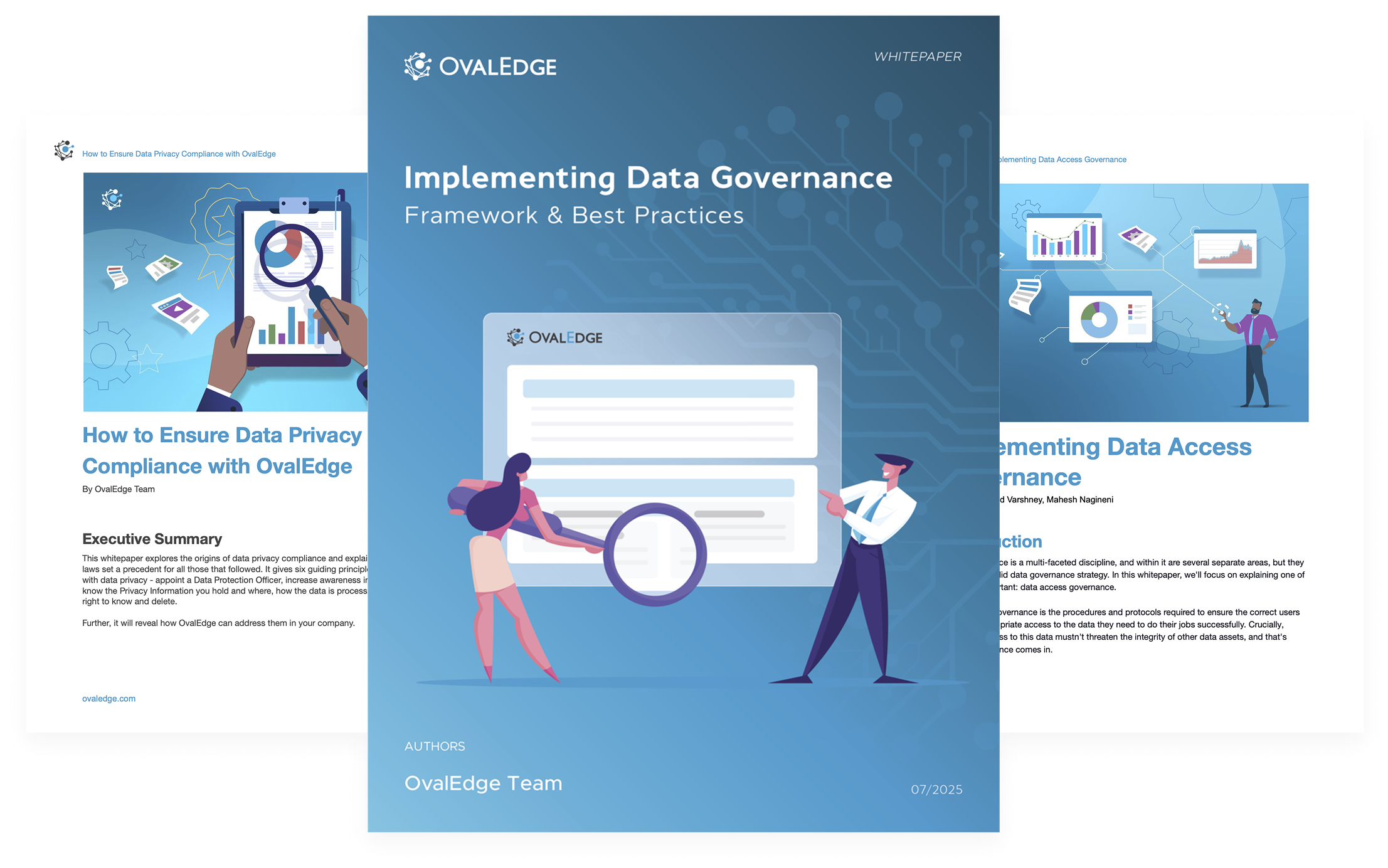
Deep-dive whitepapers on modern data governance and agentic analytics
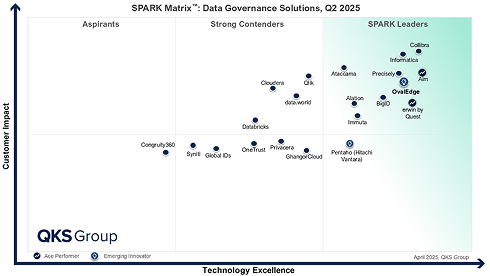
OvalEdge Recognized as a Leader in Data Governance Solutions
3ff1.png)
“Reference customers have repeatedly mentioned the great customer service they receive along with the support for their custom requirements, facilitating time to value. OvalEdge fits well with organizations prioritizing business user empowerment within their data governance strategy.”
aef2.png)
“Reference customers have repeatedly mentioned the great customer service they receive along with the support for their custom requirements, facilitating time to value. OvalEdge fits well with organizations prioritizing business user empowerment within their data governance strategy.”
Gartner, Magic Quadrant for Data and Analytics Governance Platforms, January 2025
Gartner does not endorse any vendor, product or service depicted in its research publications, and does not advise technology users to select only those vendors with the highest ratings or other designation. Gartner research publications consist of the opinions of Gartner’s research organization and should not be construed as statements of fact. Gartner disclaims all warranties, expressed or implied, with respect to this research, including any warranties of merchantability or fitness for a particular purpose.
GARTNER and MAGIC QUADRANT are registered trademarks of Gartner, Inc. and/or its affiliates in the U.S. and internationally and are used herein with permission. All rights reserved.